

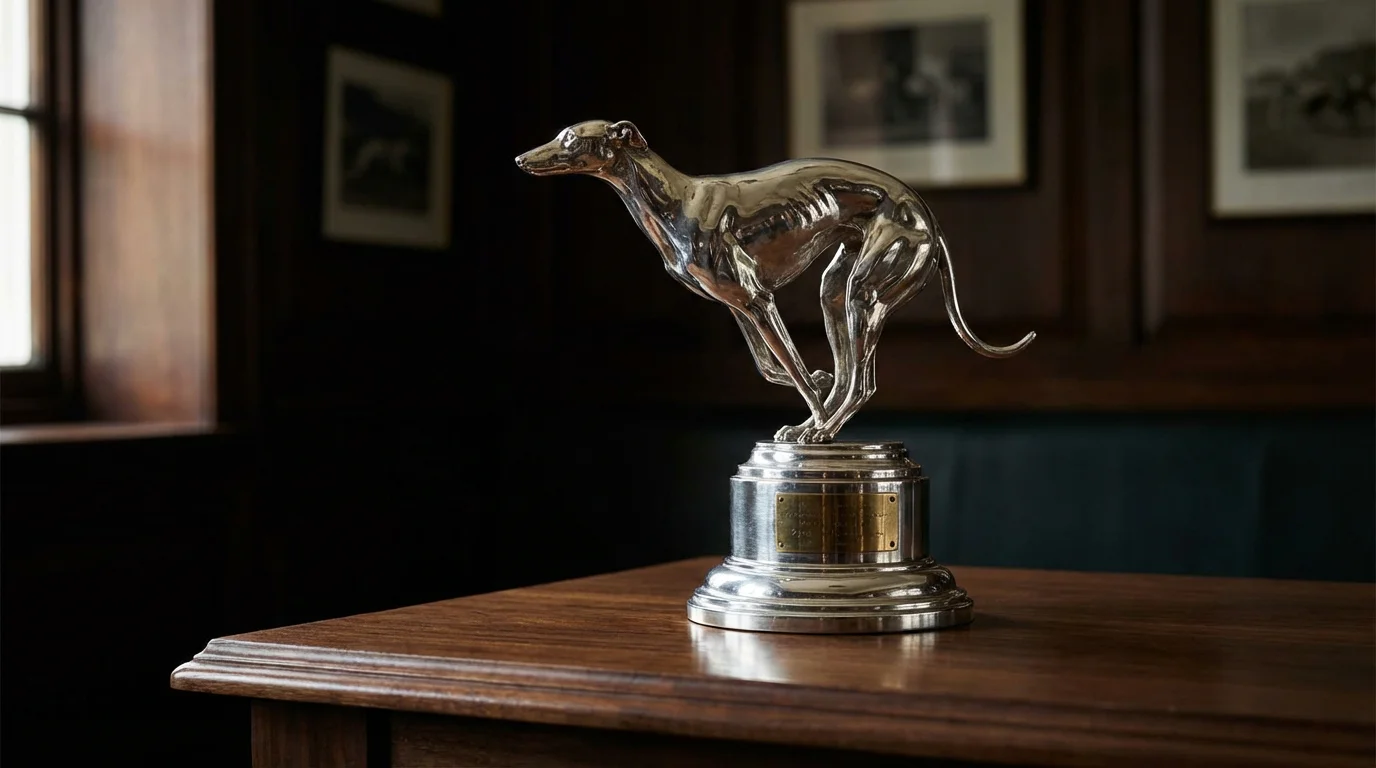
A Century of Derby Champions
Every winner tells a story about the era they raced in. The English Greyhound Derby has been contested annually since 1927, surviving venue closures, world wars, financial crises, and the long decline of British greyhound racing as a spectator sport. Through all of it, the Derby has produced a winner every year — a sequence of champions that maps the sport’s history from the packed terraces of White City to the sand circuit at Towcester.
The winners’ list is more than a record. It’s a dataset. Patterns emerge when you look across decades of results: which trainers dominated which eras, how starting prices have shifted over time, which trap positions have produced winners, and how the profile of a Derby champion has changed as the sport and its venues have evolved. For punters preparing for the 2026 renewal, the historical record doesn’t predict the future — but it narrows the range of likely outcomes in ways that improve your analysis.
Full List of English Greyhound Derby Winners
Year, winner, trainer, SP, and venue — from 1927 to 2025. The complete list of English Greyhound Derby winners spans nearly a century of competition across multiple venues. The first running at White City in 1927 was won by Entry Badge, trained by Joe Harmon, at a starting price of 1/4 — the shortest-priced winner in Derby history and a reflection of a small inaugural field where one dog was clearly superior.
The White City era (1927-1984) produced champions in front of enormous crowds. Mick the Miller, who won back-to-back Derbies in 1929 and 1930, became the first greyhound celebrity — a dog whose fame extended beyond the sport into popular culture. Patricia’s Hope repeated the feat in 1972 and 1973, cementing the rare double as one of the sport’s most prestigious achievements. The White City years were defined by large fields, strong public interest, and winners that became household names.
The Wimbledon era (1985-2016) saw the Derby relocate to south-west London, where it remained for over three decades. This period produced some of the most competitive finals in the event’s history. Trainers like Charlie Lister, who amassed a record seven Derby wins between 1997 and 2013, dominated the event across multiple decades. The Wimbledon years also saw increasing Irish influence, with trainers from across the Irish Sea regularly targeting the event with their best dogs and gradually shifting the competitive balance of the tournament.
The modern era began with the move from Wimbledon following the stadium’s closure in 2017. The Derby relocated to Towcester in 2017, then moved temporarily to Nottingham in 2019 and 2020 after Towcester faced financial difficulties, before returning to Towcester in 2021 where it is currently held. This period of venue instability hasn’t diminished the event’s competitive quality — the prize money, the entry depth, and the standard of the finalists have remained consistently high.
A full year-by-year listing of every Derby winner from 1927 through 2025, including trainer, starting price, and venue, would fill a page on its own. The most analytically useful subset for current punters is the last 20 years of results, where the data reflects the modern competitive landscape — the current training methods, the current pool of bloodlines, and the current track conditions that the 2026 winner will face.
Trends in the Winners’ List
Irish-trained dogs, short-priced favourites, and the trainers who dominated. Three trends stand out when you analyse the winners’ list across the modern era.
The first is the growing dominance of Irish-trained entries. In the Derby’s first 50 years, British-trained dogs won the vast majority of renewals. Since the 1990s, the balance has shifted dramatically. Irish trainers now account for a significant proportion of Derby winners, reflecting the strength of the Irish greyhound breeding and training industry. Kennels in Ireland benefit from a larger population of racing greyhounds, a deep competitive structure at home, and a tradition of targeting the English Derby as the sport’s ultimate prize. For punters, the practical implication is clear: dismissing Irish entries because they come from unfamiliar tracks is a mistake. The track names might be less recognisable, but the quality is consistently world-class.
The second trend is the trainer concentration. A small number of trainers have won a disproportionate share of Derbies. Charlie Lister’s seven wins is the most extreme example, but several other trainers have multiple victories. This isn’t random — it reflects the compounding advantages of experience, resources, and breeding programmes that allow top kennels to produce multiple contenders year after year. When assessing the Derby ante-post market, trainer track record in the specific event carries predictive weight that general trainer form does not.
The third trend is the starting price distribution. Derby winners come at a wide range of prices, but the distribution skews toward the mid-range. Most winners in recent decades have been priced between 3/1 and 10/1, with occasional outliers in both directions. Very short-priced favourites — 6/4 or shorter — have a poor conversion rate in the final, while extreme outsiders at 20/1 and beyond win rarely. The sweet spot for Derby winners, historically, is the 4/1 to 8/1 range — dogs that the market respects without crowning.
The Biggest Surprises and Longest Odds Winners
Astute Missile at 28/1 in 2017 remains the longest-priced winner in modern Derby history. That result — at the first Derby held at Towcester — sent shockwaves through the sport and demonstrated the event’s capacity for genuine surprises. Astute Missile was not an unknown dog, but it was unfancied in the final market, priced behind several more prominent contenders whose form through the earlier rounds had been more visually impressive.
The 2017 result was extreme but not unprecedented. The Derby has a long tradition of producing winners at prices that would be considered upsets in most other sporting contexts. Dogs at 10/1, 12/1, and 14/1 have won multiple times in the modern era, and the common thread among these results is instructive: nearly all of them featured a dog that had quietly progressed through the tournament without dominating, arrived at the final with less physical wear than the market leader, and benefited from a favourable first-bend run that its form and draw made possible.
For punters, the lesson from the upset winners is not to back every outsider and hope for chaos. It’s to take the final-night market seriously and look beyond the top two or three in the betting for dogs whose profiles fit the historical upset pattern. Fresh legs, a middle-market price, a draw that suits the running style, and a first-bend scenario where the pace from inside might create room for a dog racing wider. These are the conditions that produce surprises, and they occur in the Derby more frequently than in standard racing because the six-round tournament filters for fitness and adaptability, not just raw speed.
Recent Winners and What They Tell Us About 2026
The last five winners reveal patterns that punters can exploit. Without detailing every individual result, the broad profile of recent Derby champions shows consistency across several dimensions.
Recent winners have typically been experienced open-class racers rather than lightly raced rising stars. They have generally contested at least two Category One or high-profile open events before entering the Derby, giving them a competitive grounding that translates to the tournament’s demands. This suggests that the Derby rewards proven performers over exciting unknowns — a useful filter when the ante-post market throws up heavily backed newcomers with limited top-level form.
Towcester course form has been present, directly or through trial performances, for most recent winners. Dogs that arrived at the Derby with no prior Towcester data and won are the exception, not the rule. This reinforces the importance of tracking trial reports and early-round performances at the venue as the primary form study for Derby punters.
The trainers of recent winners have almost all been established names with multiple previous Derby entries. First-time Derby trainers winning the event is rare in the modern era — the logistical and tactical demands of managing a six-week campaign at a specific venue favour trainers who have done it before and know the rhythm of the tournament.
History Doesn’t Repeat — But the Form Book Rhymes
The past doesn’t predict the future. But it narrows the field. A century of Derby results tells you that the winner is likely to be an experienced open-class dog, probably trained by an established kennel with Derby pedigree, probably priced between 4/1 and 10/1, and probably carrying Towcester form from earlier in the campaign. Those probabilities don’t eliminate any dog from contention, but they weight your analysis toward the profiles that history has rewarded most often.
Every year produces its own story, and the 2026 Derby will be no different. The dog that wins on final night will join a list that stretches back to Entry Badge in 1927 — a list that represents the most sustained competitive tradition in British greyhound racing. Your job isn’t to predict history. It’s to read it well enough to recognise the patterns when they appear in front of you.
