

Conditions Change the Track — Most Bettors Don’t Notice
Sand, rain, and temperature change the track. Most bettors ignore conditions. The smart ones don’t. A greyhound race card tells you the dog, the trap, the form, and the time. It doesn’t tell you what the track felt like under the dogs’ feet when those times were recorded, or what it will feel like tonight. That missing variable — the going — influences race outcomes in ways that are measurable, predictable, and routinely overlooked.
In horse racing, the going report is central to every betting decision. The going stick reading, the official assessment, the overnight rainfall — these are discussed, analysed, and priced into the market as a matter of routine. In greyhound racing, the equivalent information exists but receives a fraction of the attention. Track surfaces change with the weather, race times fluctuate with temperature, and the physical demands on the dogs shift depending on whether the sand is wet and heavy or dry and loose. None of this is invisible. It just isn’t prioritised by the majority of the betting public.
This guide covers how UK track surfaces work, how weather affects race conditions, and how to adjust your betting when the conditions change — because the dogs notice, even if you don’t.
Surface Types and Maintenance
Sand-based surfaces dominate UK tracks. How they’re maintained determines running speed. Virtually every GBGB-licensed greyhound track in Britain now races on a sand-based surface, replacing the grass circuits that were common until the late twentieth century. Sand offers a more consistent, year-round racing surface than grass, requires less recovery time between meetings, and is less affected by seasonal extremes — though it is still far from immune to weather.
Sand composition varies between tracks. The grade, grain size, and mineral content of the sand differ, producing surfaces that feel different to run on and that generate different pace profiles. Towcester’s sand is generally regarded as slightly heavier and slower than the surfaces at tracks like Nottingham or Sunderland, where the sand tends to ride faster. These differences are built into the track-specific times that form guides publish, but punters comparing form across venues need to remember that the surface itself is a variable, not just the distance and bend geometry.
Maintenance is the hidden factor. Track staff prepare the surface before every meeting — raking, watering, levelling, and compacting the sand to produce a consistent running surface. The quality and consistency of this preparation directly affects how the surface plays during the meeting. A well-prepared surface will ride evenly throughout an eight-race card. A poorly maintained one might deteriorate through the evening, with the bends becoming churned and the kickback increasing as the sand is displaced by successive races. Dogs running in the later races on a deteriorating surface face conditions that weren’t present in the first race.
For Derby punters, the surface preparation at Towcester is generally of a high standard — the venue knows it’s hosting the sport’s biggest event and prepares accordingly. But even at Towcester, the surface condition can change between the first heat and the last, particularly on warm evenings when the sand dries out during the session. Noting which race number your selection runs in, and whether the surface is likely to have changed since the earlier races, is a small but genuine edge.
Weather Impact on Race Outcomes
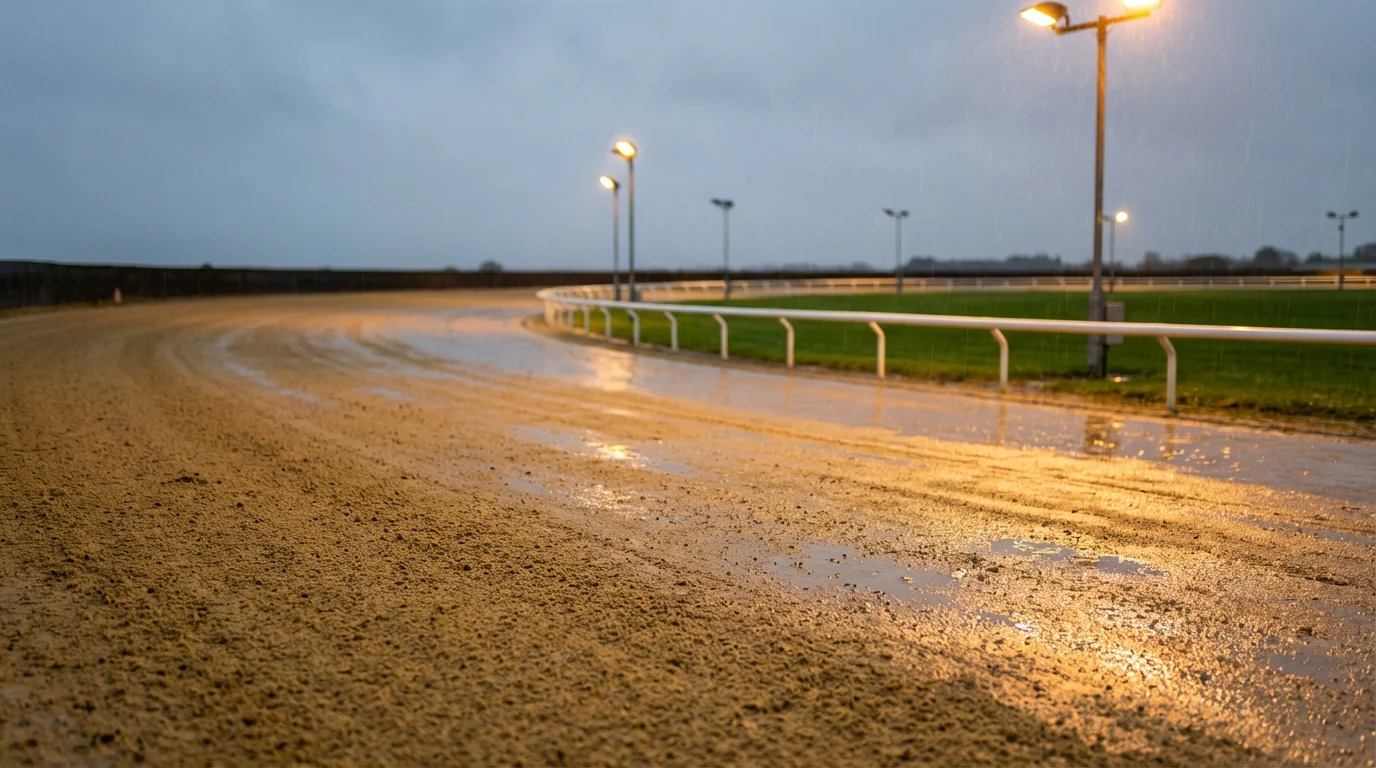
Rain slows times, hardens the surface unevenly, and benefits stronger dogs. Rainfall before or during a meeting has the most dramatic effect on track conditions. Wet sand becomes denser and heavier, increasing the resistance the dogs push against with every stride. Overall race times slow — sometimes by two or three tenths of a second over 500 metres — and the physical demands on the dogs increase correspondingly.
The impact is not evenly distributed across running styles. Front runners that depend on explosive early pace are disproportionately affected by wet conditions. Their advantage comes from sprinting to the first bend faster than anything else in the field, and heavier sand saps that initial burst of acceleration. Closers and stamina runners cope better. Their style involves sustained effort rather than a single explosive phase, and the heavier surface actually plays to their strengths — it dulls the speed of the dogs in front, allowing the closer to gain ground in the final straight that it wouldn’t gain on a fast, dry surface.
Temperature matters more than most punters realise. Cold evenings produce denser air and firmer sand, generating marginally faster conditions. Warm evenings — particularly after a dry spell — loosen the top layer of sand and create a surface that breaks apart under the dogs’ feet on the bends. Dogs that handle firm going well might struggle on a warm, dry evening when the surface is at its loosest, and vice versa.
Wind is Towcester’s particular weather variable. The track sits in open Northamptonshire countryside with limited shelter, and a headwind on the home straight can measurably affect finishing times. A front runner battling into a headwind over the final 100 metres loses energy that a dog tucked in behind it doesn’t expend. On windy evenings, closers and dogs that sit second or third through the middle of the race gain a small but real advantage from the aerodynamic shelter of the dogs in front.
Adjusting Your Betting for Conditions
If you’re not checking the weather before a meeting, you’re giving away an edge. The adjustment process is straightforward and takes less than two minutes.
Before a Derby evening session, check the weather forecast for Towcester. If rain has fallen during the day, expect slower overall times and a track that favours stamina over speed. Adjust your assessment of pace-dependent front runners downward and consider dogs with strong run-home sectionals — their style is better suited to the conditions. If the evening is warm and dry following a dry spell, expect faster times but potentially looser sand on the bends — conditions that favour dogs with strong grip and cornering ability.
Compare the conditions tonight with the conditions when your selection last raced at Towcester. If a dog posted a fast time on a dry evening and tonight’s meeting follows heavy rain, you can’t expect it to reproduce that time. The form is real, but the conditions have changed. Conversely, a dog that ran a moderate time on a heavy evening might be capable of significantly faster on tonight’s drier surface — and if the market hasn’t priced that improvement, you’ve found value.
Track the early race times during the meeting. If Race 1 times are running half a second slower than the form figures predicted, the surface is riding heavy, and you should adjust your expectations for the rest of the card accordingly. If early times are faster than expected, the surface is quick, and speed dogs will be advantaged. This real-time calibration is one of the simplest forms of in-meeting analysis, and it’s available to anyone watching the races or checking the results as they’re posted.
The Going Beneath the Feet
Conditions are the invisible variable. Invisible — but measurable. Every race is run on a surface that has been shaped by the weather, the maintenance crew, and the races that preceded it. That surface affects how fast each dog can run, how effectively it corners, and how much energy it expends over 500 metres. Two performances recorded at the same track over the same distance can represent fundamentally different achievements if the conditions were different — and the form card doesn’t tell you that. The weather forecast does.
The punter who checks the forecast, notes the rainfall, and adjusts their form reads accordingly is making better-informed decisions than the one who doesn’t. The data investment is minimal — a glance at the weather app, a comparison with previous meeting conditions, a mental note about how the surface is likely to play tonight. That’s all it takes to incorporate a variable that most of the market ignores. The edge isn’t dramatic. Over a season, it doesn’t need to be.
