

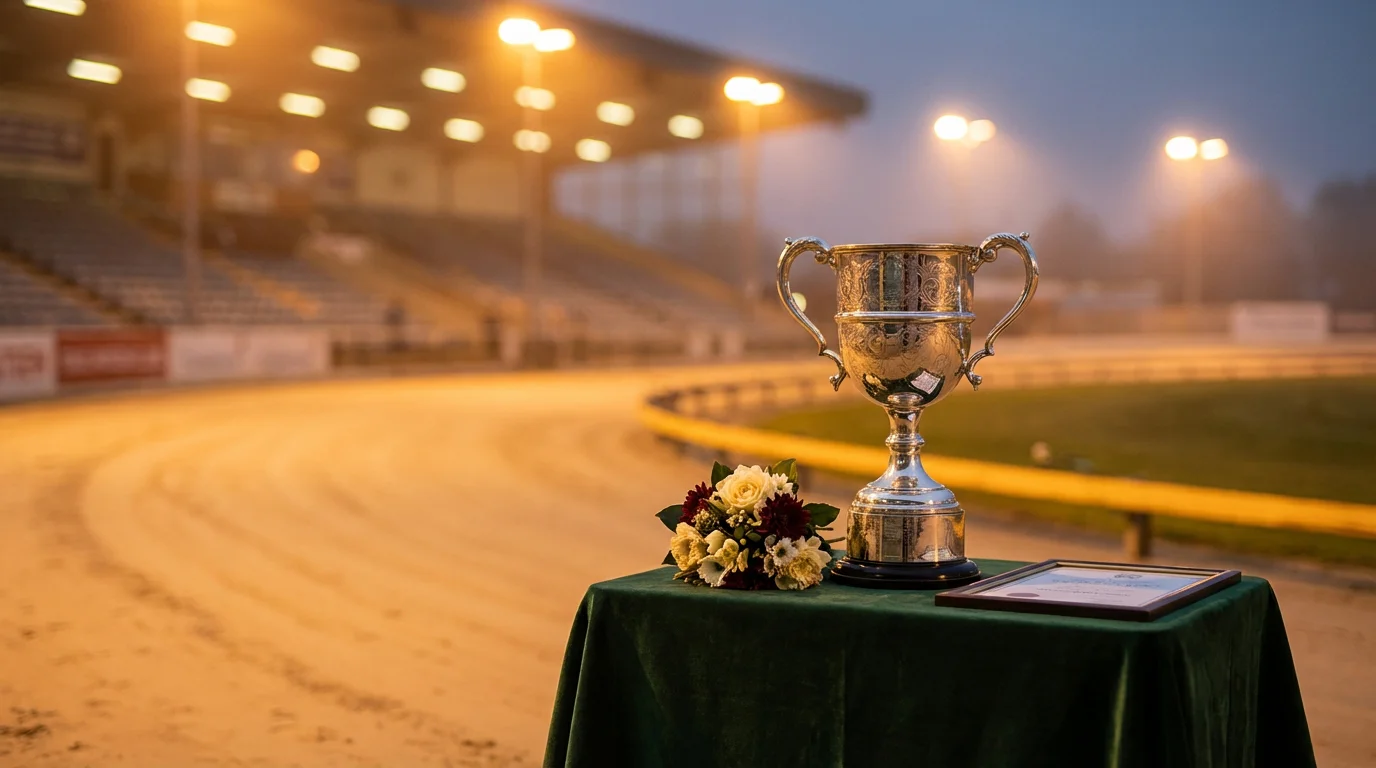
The Richest Race in British Dog Racing
£175,000 to the winner. Over £350,000 across the card. The English Greyhound Derby is not just the most prestigious race in British dog racing — it is comfortably the richest, and has been for decades. No other domestic event comes close to matching the total purse distributed across the tournament, from the opening heats through to the final night presentation.
That figure matters beyond the obvious. Prize money determines which dogs enter, which trainers commit their best runners, and how seriously the sport’s elite treat the competition. A race worth £175,000 to the winner attracts a fundamentally different calibre of entry compared to a midweek open at Romford offering a few hundred pounds. The Derby’s purse is the magnet that pulls the strongest kennels in Britain and Ireland into one venue across six weeks of racing, and it is that concentration of quality that makes the event the centrepiece of the greyhound betting calendar.
For punters, the financial structure of the Derby has practical implications. Understanding how prize money is distributed, how it has evolved, and how it compares to other major races helps explain the competitive dynamics of the tournament — why certain trainers target the Derby above all else, why the field depth is unmatched, and why the betting markets around this event behave differently to anything else in the sport.
Prize Money Breakdown by Round
Winners earn from the first round, not just the final. The Derby’s prize structure rewards progression at every stage of the tournament, which means trainers have a financial incentive to run their dogs competitively from the opening heats onwards. This is not a race where the only money that matters is the winner’s cheque on final night.
The exact breakdown varies slightly year to year, but the general structure has remained consistent. Heat winners in the early rounds receive prize money that, while modest compared to the final, exceeds what they would earn at most standard meetings. As the tournament advances through the quarter-finals and semi-finals, the per-heat purse increases. Semi-final winners typically collect a meaningful sum, and even beaten semi-finalists earn more than they would at a regular open race elsewhere.
The final itself carries the headline figure. The 2026 Derby offers £175,000 to the winning connections — owner, trainer, and associated staff split the payout according to their private arrangements. The runner-up receives a significantly smaller but still substantial prize, with diminishing sums down to sixth place. Supporting races on the final-night card also carry enhanced prize money, making the entire evening one of the most lucrative in the greyhound racing calendar.
This layered payout structure creates a specific set of competitive incentives. A trainer with a dog that reaches the semi-finals has already covered the costs of the campaign and generated a meaningful return, regardless of whether the dog makes the final. That financial cushion encourages trainers to keep entering their best dogs rather than withdrawing them to protect form for lesser events. It also means that the dogs you see in the later rounds have genuine financial reasons to be running at full intensity — the prize money at stake justifies the physical demands of the competition.
For punters tracking the tournament, the financial incentive structure is useful context. Dogs that have been earning through the rounds have connections with no reason to ease off. Conversely, a dog whose trainer has already banked decent prize money in the earlier rounds and whose chances of progressing further are slim might not receive the same preparation intensity as one still fighting for the final. These are subtle signals, but in a sport where margins are tight, they inform the picture.
How Derby Prize Money Has Changed Over the Decades
The first Derby winner took home £1,000 in 1927. Adjusted for inflation, that’s roughly £80,000 — less than half of what the modern winner receives. But in the context of 1920s greyhound racing, when the sport was exploding in popularity and stadium attendances regularly topped 50,000, it was a sum that made the Derby the race every owner wanted to win.
Prize money remained relatively stable through the mid-twentieth century, rising gradually with inflation but never making the kinds of leaps seen in horse racing’s top events. The sport’s economics were different: gate receipts and on-course betting turnover funded the purses, and as greyhound racing attendance began its long decline from the 1960s onwards, prize money growth slowed. By the 1980s and 1990s, the Derby’s purse was respectable but not transformative — Spillers sponsored the race from 1973, pushing the winner’s prize to £35,000 by 1980 — enough to attract the best dogs, but not enough to make front-page news outside the racing press.
The significant jumps came in the 2000s and 2010s, driven by broadcast deals and bookmaker sponsorship. When media companies began streaming greyhound racing to betting shops and online platforms, a new revenue stream emerged that wasn’t dependent on trackside attendance. Bookmaker investment in headline events — including the Derby — pushed prize money upward as part of broader commercial agreements with the sport’s governing body, the GBGB. The move to Towcester and its subsequent financial turbulence created uncertainty, but the Derby’s prize fund has remained the sport’s flagship number, protected even during periods when other race purses were being trimmed.
The trajectory isn’t a smooth upward line. There have been years where prize money dipped following venue changes or sponsorship gaps. But the overall direction across a century has been toward a prize that reflects the Derby’s status as the event the sport builds its commercial identity around.
How the Derby Compares to Other Major Greyhound Races
Only The Phoenix in Australia offers more prize money in greyhound racing globally. The Phoenix — run at The Meadows in Melbourne — carries a total prize pool of A$1.65 million and a A$1 million winner’s cheque, making it the richest single greyhound race in the world. The Sportsbet Melbourne Cup, also held in Australia at Sandown Park, offers A$500,000 to the winner from a series total exceeding A$1 million. Outside of Australia, the English Derby sits at the top of the prize money table internationally.
Within the UK and Ireland, the gap between the Derby and the next tier of events is substantial. The Irish Greyhound Derby, held at Shelbourne Park, offers significant prize money and prestige but typically falls short of the English Derby’s headline figure. The Scottish Greyhound Derby, the St Leger, the Select Stakes, and other Category One events in Britain carry purses that are meaningful by the sport’s standards but a fraction of what the Derby winner collects. A dog winning the St Leger might earn £25,000 to £40,000; the same dog winning the English Derby earns four to seven times that amount.
This financial disparity explains why the Derby attracts international entries — particularly from Ireland — in numbers that other UK races don’t. Irish trainers, who dominate the sport at the elite level, consistently target the English Derby as the top priority of the calendar. The prize money justifies the logistics: transporting dogs to Towcester for trials, maintaining them in England for the duration of the six-week tournament, and absorbing the costs of a campaign that may end in Round 2. For smaller events, that overhead isn’t worth it. For the Derby, it is.
Compared to horse racing, greyhound prize money remains modest. The Epsom Derby distributes £1.5 million; Royal Ascot’s feature races offer similar sums. But greyhound racing operates on a different economic scale, with lower ownership costs, shorter racing careers, and a smaller commercial infrastructure. Within its own ecosystem, the £175,000 Derby winner’s prize is the sport’s equivalent of the Gold Cup — a number that validates an entire season’s work.
What Prize Money Means for Punters
Higher prize money attracts stronger fields, which makes form analysis more critical. This is the chain of causation that connects the Derby’s purse to your betting decisions. When £175,000 is on the line, every serious kennel in Britain and Ireland sends their best dogs. That means the field quality in every round is higher than at any other meeting, the gaps between runners are smaller, and the likelihood of upsets is greater.
In practical terms, this means that betting on the Derby requires more homework than betting on a Tuesday evening card at Sunderland. The dogs are better, the competition is tighter, and the market is more efficient because more informed punters are paying attention. At a low-profile meeting, one decent form read can separate a winner from the field. At the Derby, every dog in the later rounds has a decent form read — the question becomes which marginal advantages will prove decisive on the night.
The prize money also influences trainer behaviour in ways that affect your analysis. Trainers protecting a Derby campaign will sometimes withdraw a dog from intermediate races in the weeks before the heats begin, sacrificing smaller prizes to keep the dog fresh. If a dog you’ve been following through the spring suddenly disappears from the card for two or three weeks, that absence might signal Derby preparation rather than injury. Checking the Derby entry list against recent absentees from the open-race circuit can reveal which trainers are managing their campaigns strategically.
The Stakes Are High — for Dogs, Trainers, and Punters
£175,000 concentrates the best dogs in one place. That’s the opportunity. The Derby’s prize fund is not just a number — it’s the force that shapes the tournament’s competitive landscape, drawing in the strongest runners, the most experienced trainers, and the deepest betting markets the sport produces. Every aspect of the event, from the quality of the opening heats to the intensity of the final, is a consequence of what’s at stake financially.
For punters, this concentration of quality is both a challenge and an invitation. The fields are harder to separate, but the data is richer, the form lines are longer, and the market pays attention in ways it doesn’t for everyday racing. The prize money makes the Derby the hardest greyhound race to win. It also makes it the most rewarding one to analyse.
