

A Different Way to Bet on the Same Race
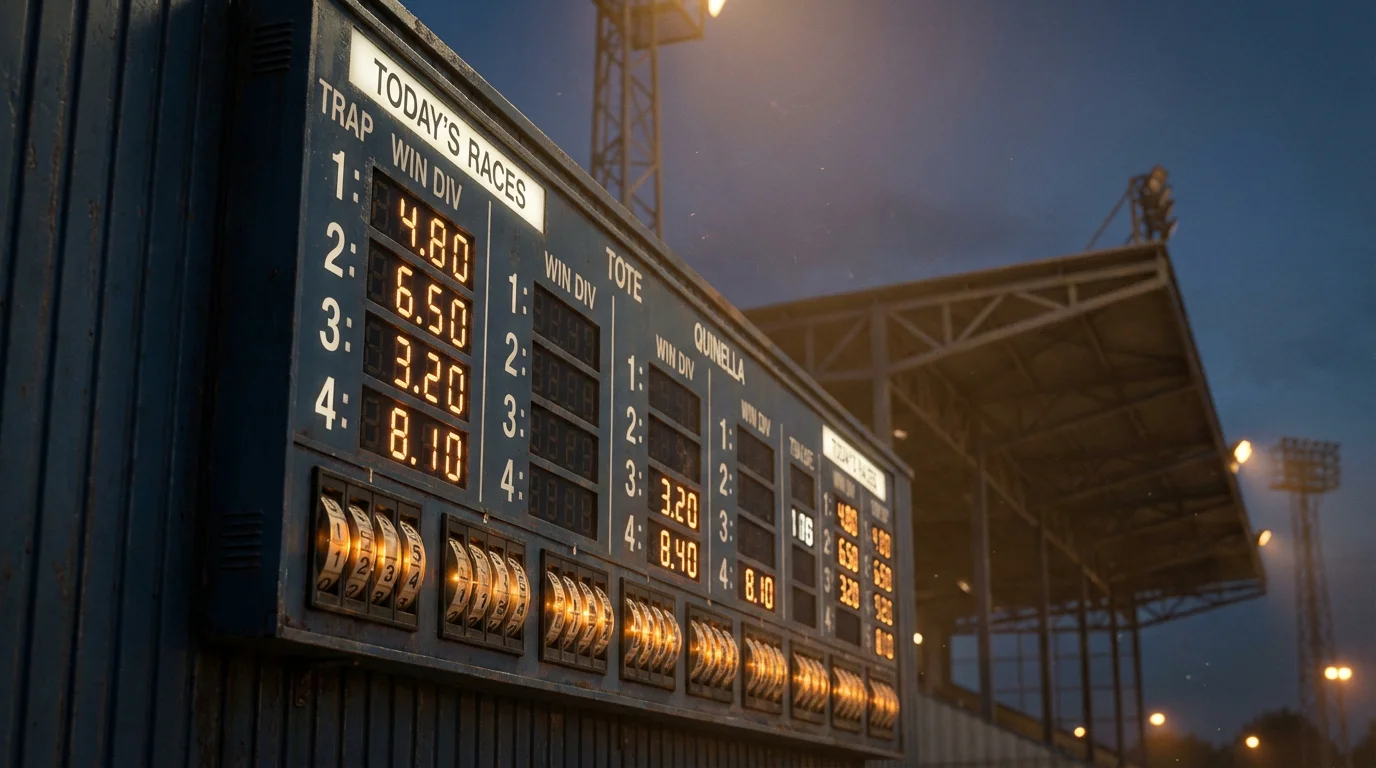
The tote is pool betting. Your return depends on what everyone else staked — not what the bookmaker offered. When you place a bet with a traditional bookmaker, the price is fixed at the moment you click. When you bet into the tote, your stake joins a pool alongside every other punter’s money, and the final payout is determined after the race by dividing the pool among the winning tickets. The odds you receive aren’t set in advance. They’re calculated after the market has closed, based on how much was bet on each dog.
This distinction — fixed odds versus pool odds — changes the dynamics of what you’re doing when you bet. With a bookmaker, you’re taking a position against the house at a price you can evaluate before committing. With the tote, you’re entering a pool whose final shape you can’t fully predict. The potential return might be higher or lower than the bookmaker’s price, and you won’t know which until the race is over. This uncertainty is the tote’s central characteristic, and it creates both risks and opportunities that fixed-odds betting doesn’t offer.
Greyhound racing has a deep relationship with pool betting. The tote at the track was, for decades, the primary way most punters wagered on the dogs. Online migration has shifted volume toward fixed-odds bookmakers, but the tote pools remain active — particularly at major meetings and for exotic bet types like forecasts and tricasts where the pool dividend can significantly exceed the bookmaker’s price.
How Pool Betting Works
Every pound goes into a pool. The payout is divided among winners. Simple concept, variable returns. The mechanics of tote betting are straightforward. All stakes on a given race are collected into a pool. The tote operator deducts a percentage — the takeout — which covers operating costs and profit. The remaining pool is then divided equally among the winning units.
For a win pool, if £10,000 is wagered in total and the takeout is 15%, the distributable pool is £8,500. If £1,700 of the original £10,000 was staked on the winning dog, the dividend is £8,500 divided by £1,700 — approximately £5 per £1 staked. Your £1 tote bet returns £5, which is equivalent to odds of 4/1. If only £850 had been staked on the winner, the dividend would be £10 per £1 — equivalent to 9/1. The less money on the winner, the higher the dividend. The more money, the lower.
Forecast pools work on the same principle but require you to predict the first and second finishers in the correct order. The pool is divided among punters who selected the correct combination. Because the number of possible forecast combinations in a six-dog race is 30 (each dog can finish first or second with any other dog), the pool is typically split among fewer winning tickets, producing higher dividends — sometimes dramatically higher than the bookmaker’s computer forecast price.
Tricast pools extend this to the first three finishers in order. The number of combinations rises to 120, meaning the tricast pool is split among even fewer winners. Tricast dividends on the tote can be enormous — three-figure or even four-figure returns per £1 staked — because the probability of any specific combination is low and the pool is concentrated among a small number of correct tickets.
The takeout percentage varies by pool type and operator. Win pools typically carry a takeout of 13-16%. Forecast and tricast pools may be slightly higher. This takeout is the tote’s equivalent of the bookmaker’s overround — it’s the operator’s margin, and it reduces your expected return over time. Understanding the takeout is essential for assessing whether the tote offers genuine value on any given race.
Tote vs Bookmaker Odds
Sometimes the tote pays more. Sometimes less. Knowing when is the skill. The tote dividend and the bookmaker’s starting price for the same dog in the same race are derived from different mechanisms — one from the pool, one from the bookmaker’s assessment — and they frequently diverge. The question for punters is whether the divergence is predictable enough to exploit.
The tote tends to pay more than the bookmaker on outsiders. In a six-dog greyhound race, casual punters disproportionately back the first and second favourites. This concentration of money on the shorter-priced dogs inflates their proportion of the pool, which in turn inflates the dividend available on the less-fancied runners. If £6,000 of a £10,000 pool is staked on the top two dogs, only £4,000 is spread across the remaining four, meaning any of those four winning produces a larger-than-proportionate payout.
Conversely, the tote tends to pay less on heavy favourites. A dog that attracts the majority of the pool money will produce a dividend that’s lower than the bookmaker’s price, because the pool mathematics compress the payout when too much money backs the same selection. If you’re backing the favourite, the bookmaker almost always offers a better return than the tote.
For forecast and tricast bets, the comparison is more nuanced. Bookmaker computer forecasts and tricasts are calculated using a formula based on the win prices of the dogs involved. The tote forecast and tricast dividends are determined by the pool. When a popular combination wins — the two favourites in the right order — the tote often pays less. When an unusual combination lands, the tote can pay substantially more, because fewer punters had that combination in the pool. This asymmetry makes the tote particularly attractive for contrarian forecast and tricast selections.
When to Use the Tote
Big fields, long-priced runners, forecast pools — these are the tote’s sweet spots. The tote offers its best value in specific circumstances, and knowing when to use it rather than defaulting to the bookmaker is a genuine edge.
Back outsiders on the tote. If your selection is a dog at 8/1 or longer with the bookmakers, check the tote pool before betting. If the pool shows relatively little money on your selection, the potential dividend may exceed the bookmaker’s price. The value gap widens further at major meetings like the Derby, where the total pool is larger and the concentration of money on the favourites is more pronounced, leaving more generous dividends available on the less-backed runners.
Use the tote for forecasts and tricasts involving at least one outsider. A forecast combining the favourite with an outsider, or two mid-priced dogs, frequently pays more on the tote than the bookmaker’s computer price, because the pool reflects the betting public’s bias toward obvious combinations. If your analysis points to an unconventional finishing order, the tote is almost always the better vehicle for that bet.
Avoid the tote on favourites and short-priced selections. The pool mechanics guarantee a compressed payout on the most-backed dog, and the bookmaker’s fixed price will almost always be superior. Also avoid the tote when pools are very small — at poorly attended meetings or in early races with minimal tote volume — because thin pools produce volatile dividends that can collapse if a single large late bet distorts the distribution.
At the Derby, the tote pools are larger than at any other greyhound meeting in the calendar, making them the most reliable pool-betting opportunity of the year. If you’re planning tote bets on the Derby, the semi-finals and final offer the deepest pools and the most stable dividends.
The Pool’s Verdict
The tote reflects the collective judgement. It’s democracy — with dividends. Every tote pool is a snapshot of what the betting public, in aggregate, thinks about the race. The weight of money on each dog represents the crowd’s assessment of each runner’s chance, filtered through bias, emotion, and varying levels of analytical sophistication. The bookmaker’s price is one person’s opinion backed by a margin. The tote dividend is everyone’s opinion, averaged out.
Neither mechanism is inherently superior. The bookmaker offers certainty — you know your price before you bet. The tote offers opportunity — the chance to be paid more than the bookmaker would offer, if the pool’s money is distributed in your favour. The punter who understands both systems and chooses between them based on the specific characteristics of each bet is making a more informed decision than the punter who defaults to one system every time.
The tote is not a relic of the pre-digital era. It’s a parallel market that operates alongside fixed-odds betting and, in specific circumstances, offers better returns. Those circumstances — outsiders, exotic bets, deep pools, contrarian selections — occur regularly enough during a Derby campaign to make the tote a tool worth understanding. Add it to your toolkit. Use it when the conditions favour it. Leave it alone when they don’t.
