Best Greyhound Betting Sites – Bet on Greyhounds in 2026
Loading...
The Home of the Greyhound Derby
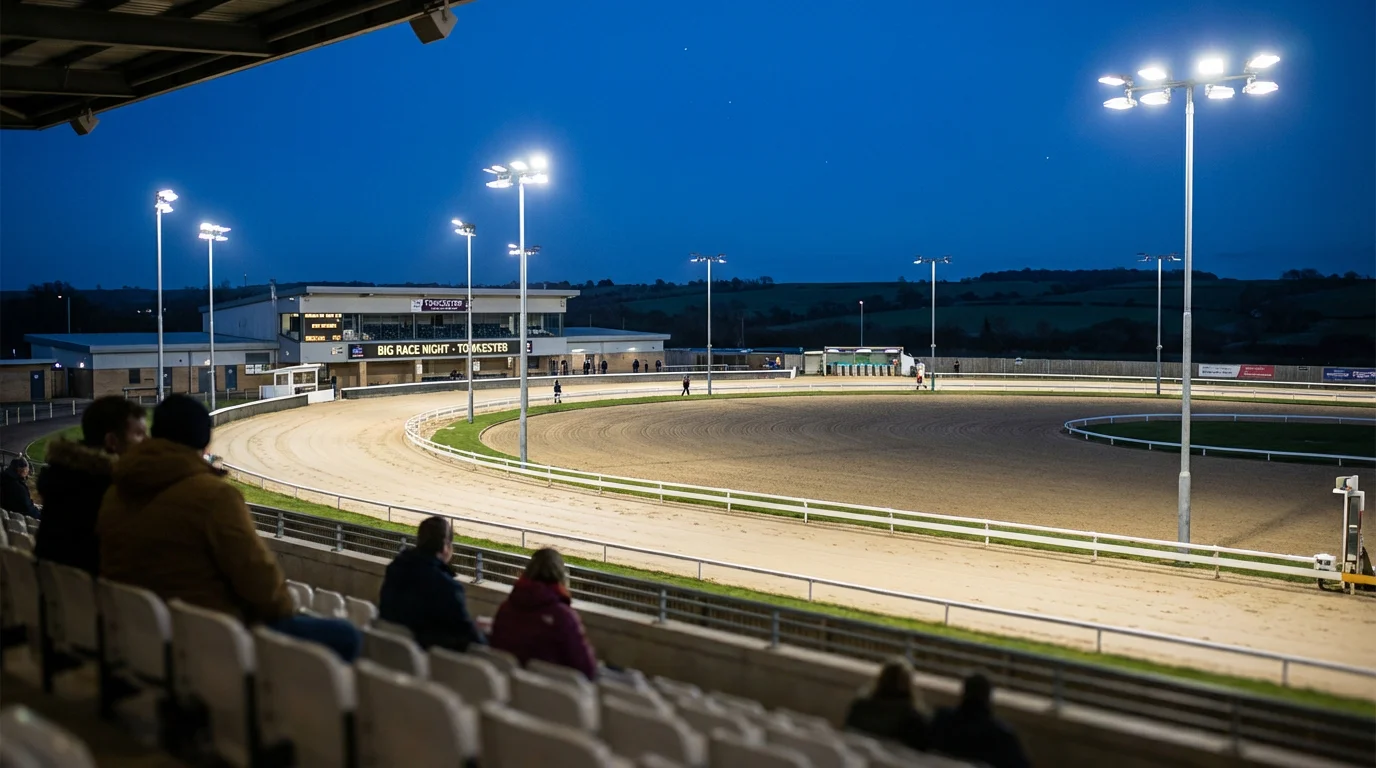
Towcester isn’t just a venue — its layout shapes the entire Derby narrative. Every heat, semi-final, and final is run over the same 500-metre sand circuit in rural Northamptonshire, and the track’s specific characteristics influence which dogs thrive and which are exposed. A runner that dominates at Romford or Nottingham can arrive at Towcester and find that its racing style, bend speed, or surface preference simply doesn’t translate.
For punters, Towcester knowledge is Derby knowledge. The trap biases, the bend geometry, the way the sand surface changes with weather — these are not background details. They are variables that directly affect race outcomes and, by extension, the value in every Derby betting market. Dogs with Towcester course form carry an informational advantage that no amount of raw ability from another circuit can fully replicate.
This guide covers the track’s physical layout, its known biases, the impact of weather on the surface, and what to expect if you attend in person. Whether you’re betting remotely or planning to watch the final trackside, understanding Towcester is the first step in any serious Derby analysis.
Track Layout — Distance, Surface, and Bend Configuration
500 metres, sand surface, four bends, and a long run to the first turn. Those are the defining physical parameters of the Towcester circuit, and each one matters for how races unfold.
The 500-metre trip is the standard Derby distance and sits in the middle-distance category for UK greyhound racing — longer than sprint races at 260 or 380 metres, shorter than marathon events at 640 or beyond. Over 500 metres, dogs complete a full lap of the track plus an additional section, passing through four bends and two straight stretches. The balance between early pace and stamina is roughly even at this distance, which is why it produces some of the most competitive racing in the sport. Pure sprinters can struggle to maintain their speed through the final bend, while out-and-out stayers may not have the early pace to avoid traffic at the first turn.
The sand surface at Towcester has been in place since the greyhound stadium opened in December 2014, when the purpose-built 420-metre circumference circuit was constructed inside the existing horse racing course at a cost of £1.5 million. Sand is now the standard across most UK greyhound tracks, but Towcester’s particular sand composition and depth affect how dogs grip through the bends and how quickly the surface drains after rainfall. The sand at Towcester is generally considered to be on the slower side compared to some other UK venues, which slightly favours dogs with natural stamina over those that rely on blistering early speed alone.
The run from the traps to the first bend is one of Towcester’s distinctive features. It’s longer than at compact circuits like Romford or Crayford, giving dogs more time to establish position before the field compresses into the first turn. This extra run-up distance has specific implications for the trap draw: it partially reduces the inherent advantage of inside draws by allowing middle and outside dogs to build speed and compete for position, though Trap 1 still wins more than its proportional share overall.
The four bends are not identical. The first and third are transition points — where the field moves from straight running into the turns — and produce more congestion than the second and fourth, where dogs have already settled into racing lines. How each bend at Towcester interacts with the trap draw, course experience, and running style is central to understanding the track’s biases.
Known Track Biases and Bend Behaviour
The first and third bends catch out dogs without course knowledge. This is Towcester’s most consistent bias, and it shows up in the results year after year: dogs racing at the venue for the first time run wider on these bends than dogs with prior Towcester experience, losing ground that accumulates through the race.
The first bend is where most races at Towcester are effectively decided. The angle of entry, the camber of the track surface, and the tightening radius all combine to create a turn that punishes dogs running too wide or too fast into the bend. Dogs with experience of this bend learn to adjust their line — hugging the rail if they have the pace to hold the inside, or settling behind the leaders rather than fighting for position they can’t sustain. First-timers, without that learned adjustment, tend to race more aggressively into the bend and pay for it in lost ground and wasted energy.
The inside traps benefit from this geometry, but not as dramatically as at tighter tracks. Trap 1 performs above the statistical average at Towcester over 500 metres, though the margin is narrower than the national average across all UK tracks. Traps 2 and 3 perform well, particularly when occupied by dogs that break quickly enough to slot in behind the leader without being pushed wide. The outside traps — 5 and 6 — underperform, with Trap 6 carrying the biggest statistical penalty. However, a fast-breaking wide runner can overcome this deficit if it has the raw pace to clear the field before the bend tightens.
There’s also a less-discussed bias toward dogs that race prominently through the middle of the contest. At some tracks, closers who sit at the back of the field and pick off tiring leaders have a reliable route to victory. At Towcester, the bend geometry makes late running harder, because dogs attempting to pass on the bends lose more ground going wide than they would at circuits with gentler turns. Front runners and prominent racers — dogs that sit second or third through the middle bends — have a structural advantage here that their finishing position alone might not reveal.
How Weather Affects Towcester’s Sand Surface
Heavy rain makes the sand heavier. Dry spells speed it up. Both shift the market. Towcester’s sand surface is exposed to the Northamptonshire weather with limited artificial drainage compared to some indoor or partially covered circuits, which means that conditions on race night are directly affected by what happened in the sky over the preceding 24 to 48 hours.
Wet sand absorbs water and becomes denser, which slows overall race times and increases the physical demands on the dogs. The effect is not uniform across running styles. Dogs that rely on explosive early pace are disproportionately affected, because the heavier surface saps the initial burst of speed that gets them to the first bend ahead of the field. Stamina runners and closers — dogs with strong run-home times — tend to cope better in wet conditions, because their racing style already accounts for sustained effort rather than a single burst.
Dry conditions produce faster surfaces and faster times, but they also change the grip dynamics. Very dry sand can become loose on the top layer, which affects how dogs corner on the bends. A dog that handles the bends beautifully on a moderately moist surface might struggle for traction when the sand is bone dry. This effect is subtle and hard to quantify from form data alone, but trainers who know their dogs well are acutely aware of it — and their decisions to run or withdraw dogs from specific meetings are often influenced by the going report.
Wind is the overlooked variable. Towcester’s location in open Northamptonshire countryside means it’s more exposed to wind than urban circuits like Romford or Crayford. A headwind on the home straight can cost a front runner half a length over the final 100 metres, which is enough to turn a comfortable win into a tight finish. Checking the forecast before a Derby evening session is a habit that costs nothing and occasionally reveals an edge the market hasn’t priced.
Attending the Derby at Towcester
Facilities, access, and what to expect on race night. Towcester is located off the A5 in south Northamptonshire, roughly 70 miles northwest of London and accessible by car from the M1 or M40 motorways. There is no nearby rail station within comfortable walking distance, so driving or pre-arranged transport is the practical option for most racegoers.
The greyhound stadium sits alongside the Towcester Racecourse, sharing some infrastructure including parking and the main entrance. On Derby nights — particularly the semi-finals and final — the venue draws substantially larger crowds than regular race meetings, and parking can fill up earlier than expected. Arriving well before the first race is advisable if you want a trackside position with clear sightlines to the first bend and home straight.
On-course betting is available through trackside bookmakers and tote windows, and the atmosphere on final night is the closest British greyhound racing gets to a major sporting occasion. There’s a palpable intensity in the crowd, particularly around the paddock area where the finalists are paraded before the race. For punters used to watching races on a screen, seeing the dogs in person provides a different kind of information — coat condition, muscle tone, demeanour in the parade — that supplements the form data without replacing it.
Know the Track, Know the Derby
Course form is the most undervalued asset in Derby betting. Dogs that have raced at Towcester before — and performed well — carry an edge that pure ability cannot fully substitute. They know the bends. Their trainers know the surface. Their sectional data is directly comparable to the rest of the Derby field without the guesswork of cross-track translation.
For any punter building a Derby shortlist, the first filter should be Towcester experience. A dog with three Towcester runs and improving sectionals is a more reliable betting proposition than one arriving with faster times from another circuit but no history at the venue. The track is the constant in every Derby. The dogs that understand it have a head start on those that don’t.